In His Own Words
Casanova Quotes from the Memoirs, with Sources
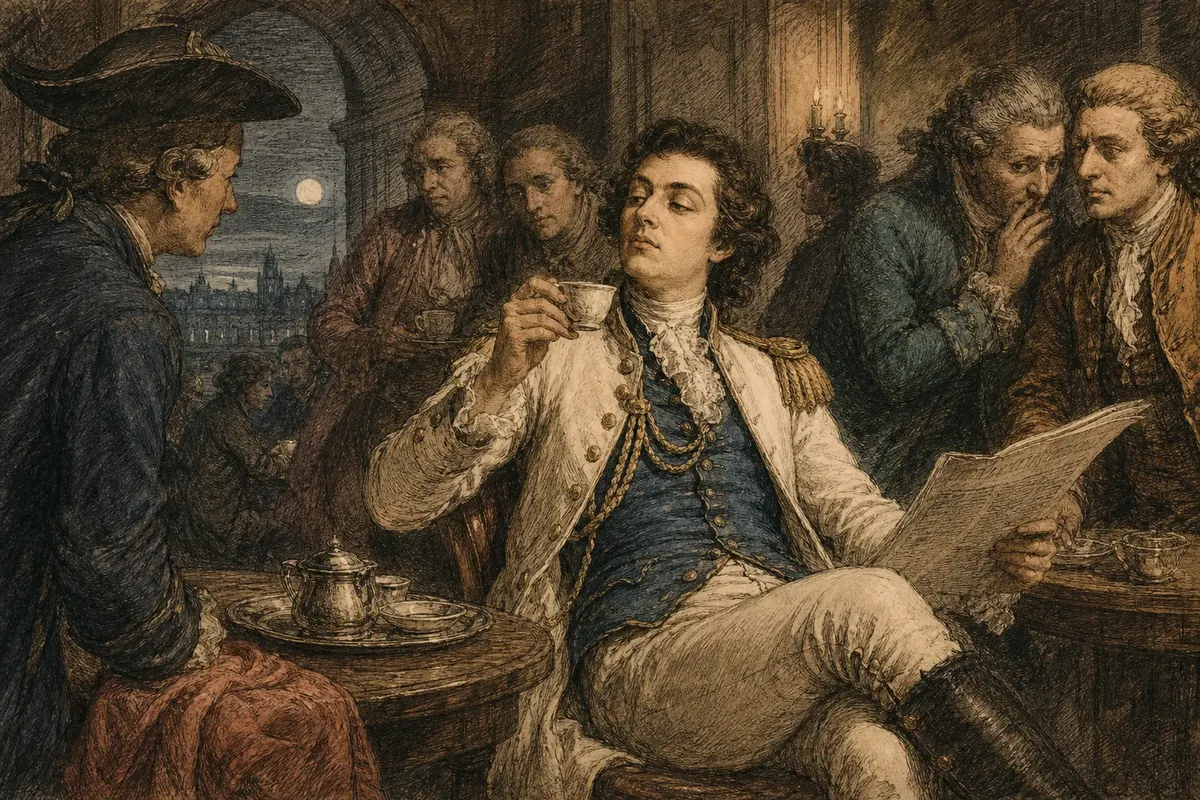
These quotes are taken from the English text of Casanova's Memoirs in this app, mostly from the Author's Preface, and each one names its source. Many quotes shared online are paraphrases or cannot be traced to the book, so we list only what we could find and flag two well-known ones we could not.
Casanova is one of the most quoted men of the 18th century, and many of the quotes you see online are paraphrases, loose translations or inventions. The ones below are in the English text of the Memoirs in this app (the translation dates from the 1890s). Different translations word things differently, so you may see slightly different versions elsewhere.
On himself and his purpose
"I will begin with this confession: whatever I have done in the course of my life, whether it be good or evil, has been done freely; I am a free agent."
Author's Preface
"Worthy or not, my life is my subject, and my subject is my life."
Author's Preface
"I have written the history of my life, and I have a perfect right to do so; but am I wise in throwing it before a public of which I know nothing but evil? No, I am aware it is sheer folly, but I want to be busy, I want to laugh, and why should I deny myself this gratification?"
Author's Preface
"By recollecting the pleasures I have had formerly, I renew them, I enjoy them a second time, while I laugh at the remembrance of troubles now past, and which I no longer feel."
Author's Preface
On pleasure and love
"The chief business of my life has always been to indulge my senses; I never knew anything of greater importance. I felt myself born for the fair sex, I have ever loved it dearly, and I have been loved by it as often and as much as I could."
Author's Preface
"Happy are those who know how to obtain pleasures without injury to anyone…"
Author's Preface
Find the passage in context
Search the full text in the app and share any passage, or read the Memoirs in your browser.
On freedom, passion and forgiveness
"Man is free; yet we must not suppose that he is at liberty to do everything he pleases, for he becomes a slave the moment he allows his actions to be ruled by passion."
Author's Preface
"The man who forgets does not forgive, he only loses the remembrance of the harm inflicted on him…"
Author's Preface
"The reader of these Memoirs will discover that I never had any fixed aim before my eyes, and that my system, if it can be called a system, has been to glide away unconcernedly on the stream of life, trusting to the wind wherever it led."
Author's Preface
On death and old age
"Should I perchance still feel after my death, I would no longer have any doubt, but I would most certainly give the lie to anyone asserting before me that I was dead."
Author's Preface
"Age has calmed my passions by rendering them powerless, but my heart has not grown old and my memory has kept all the freshness of youth."
Memoirs, quoted in the appendix "Last Days at Dux"
"Now that I am but the shadow of the once brilliant Casanova, I love to chatter."
Memoirs, quoted in the appendix "Last Days at Dux"
On truth
Arthur Symons, in the preface to the English edition, quotes Casanova's claim about honesty:
"Truth is the only God I have ever adored."
Quotes we could not find
- "Love is three-quarters curiosity." This is widely credited to Casanova, but we could not find it in the English text in this app. It may be a loose rendering of a line from another translation, or from the French original, and we have not been able to verify it.
- "I have lived as a philosopher, and die as a Christian." These are reported as his last words, and the Prince de Ligne is cited as a source. They are not in the Memoirs, which break off in 1774, long before he died. See how Casanova died at Dux.
If you have a quote you would like us to check, search the full text in the app.
Sources
- Casanova, Memoirs, Author's Preface and appendix, English translation in this app
- Arthur Symons, "Casanova at Dux" (preface in this app)
Find the passage in context
Search the full text in the app and share any passage, or read the Memoirs in your browser.
Related questions
 Casanova vs Don Juan: What's the Difference?Casanova was a real man who wrote his own story. Don Juan is a fictional seducer who is punished for his crimes. Here is how they differ, and the Mozart link.
 Casanova's History of My Life: Summary and Reading GuideWhat is Casanova's History of My Life about? A plain summary of the Memoirs, volume by volume, with the episodes worth reading first.